

Social Stencil is a neurodiversity-affirming program designed for use in schools and clinics, helping educators and clinicians facilitate inclusive social and emotional learning experiences for all learners.
Through engaging and creative pedagogy, the program explores emotions, friendships, peer relationships, and conflict in ways that are accessible, thoughtful, and neurodiversity affirming.
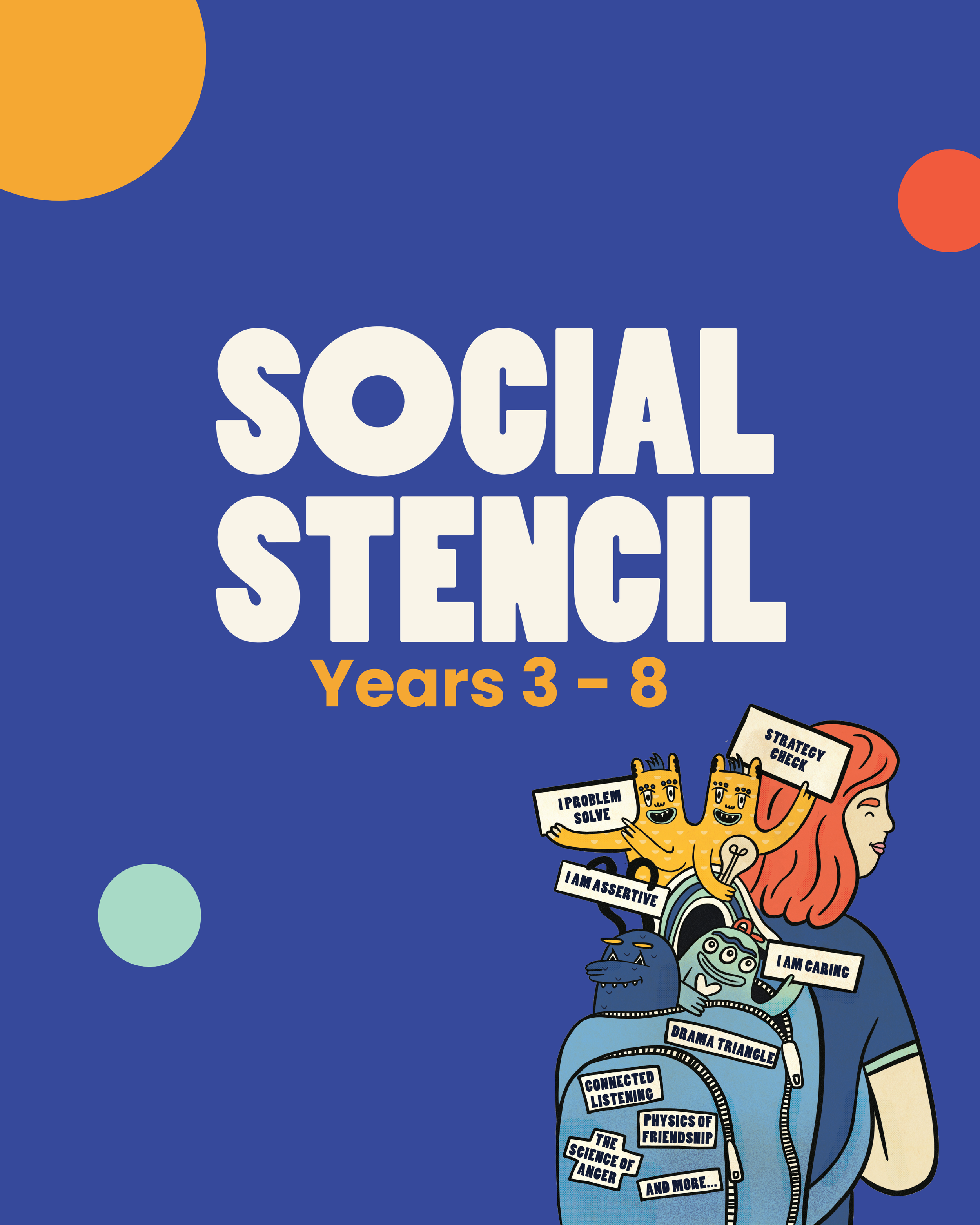
Social Stencil is for students in Grades 3–8, designed to help young people build awareness of themselves and others. Students learn listening styles, emotions, friendship concepts, why conflict happens, and strategies to support conflict management.

Social Stencil is written as a whole-class program, with lesson plans that can be adapted for small-group sessions. Inside the Social Stencil Portal you’ll also find the 1:1 Portal, which provides guides to support individual delivery of Social Stencil themes.

Take your time to download what you need (it’s all free), and explore resources to learn more about neurodiversity-affirming practice for school and home.

Junior Social Stencil is for 5 - 8 year olds and older children with intellectual disability. It addresses foundation social and emotional developmental needs. Themes include belonging, appreciating difference, interoception, emotions and strategies to help.

Founder and Program Author, Dr Connie Buckingham (PhD), is the psychologist behind Social Stencil.
Connie first developed Social Stencil in 2008 for an all-girls school, in an effort to reduce relational aggression—a form of bullying. Since then, Connie has undertaken PhD research to expand and evaluate the program, and in 2021, with the support of Australian advocates with lived experience, the program was further developed to become neurodiversity-affirming.
Connie’s lived experience and breadth of work as a psychologist, research supervisor, and sessional lecturer all help to inform the ongoing research and development of Social Stencil.
In 2025, she was awarded the University of Melbourne Arts Alumni Giving Award for her contribution to the neurodiversity-affirming movement.