Are you looking for an inclusive approach to social and emotional learning?
One that helps students feel seen, understood and supported, while giving you practical concepts and tools to nurture belonging and relationships in the classroom?
Or perhaps you’re looking for an engaging, creative small-group program for students who are eager to dive deeper into emotions, relationships, communication, and understanding themselves and others.
Evidence-based, neurodiversity affirming social and emotional learning designed for Australian schools
Social Stencil is aligned with the Australian Curriculum (Version 9) and developed over 16 years through research, lived experience, and co-design. Social Stencil provides practical and engaging lesson plans and concepts that help students build a shared language and understanding of themselves and others.
Social Stencil supports educators to create safer, more inclusive, and more supported learning environments where everyone can feel understood, supported, and belong.

The Free Resource Share portal is a collection of free resources designed to help everyone learn more about the Social Stencil approach. You’ll find sample concepts, and discover practical strategies for classrooms and whole school communities.
Junior Social Stencil is for Reception/Prep to Grade 2 students or older students with intellectual disability. It addresses foundation social and emotional developmental needs. Themes include belonging, appreciating difference, interoception, emotions and strategies to help.
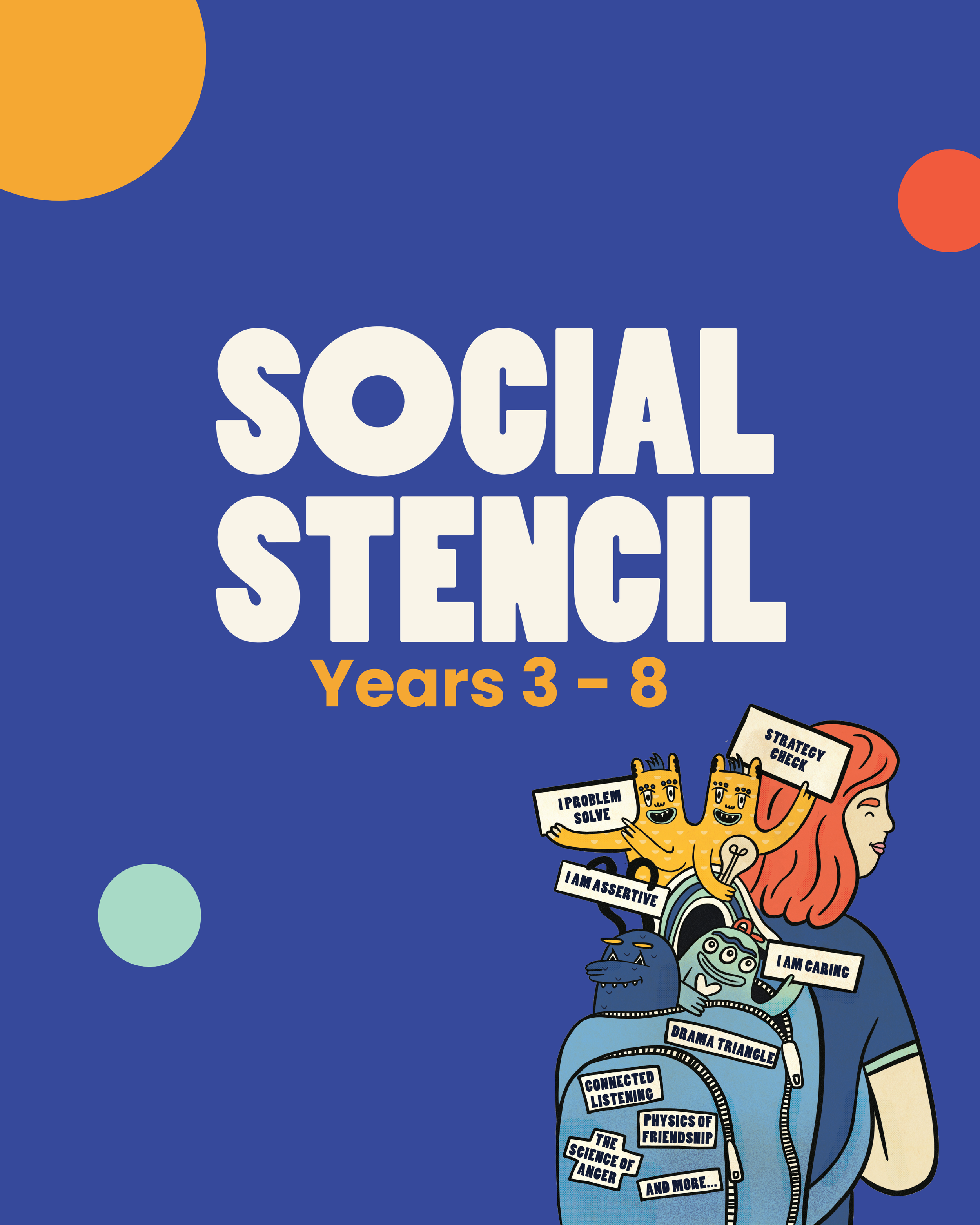
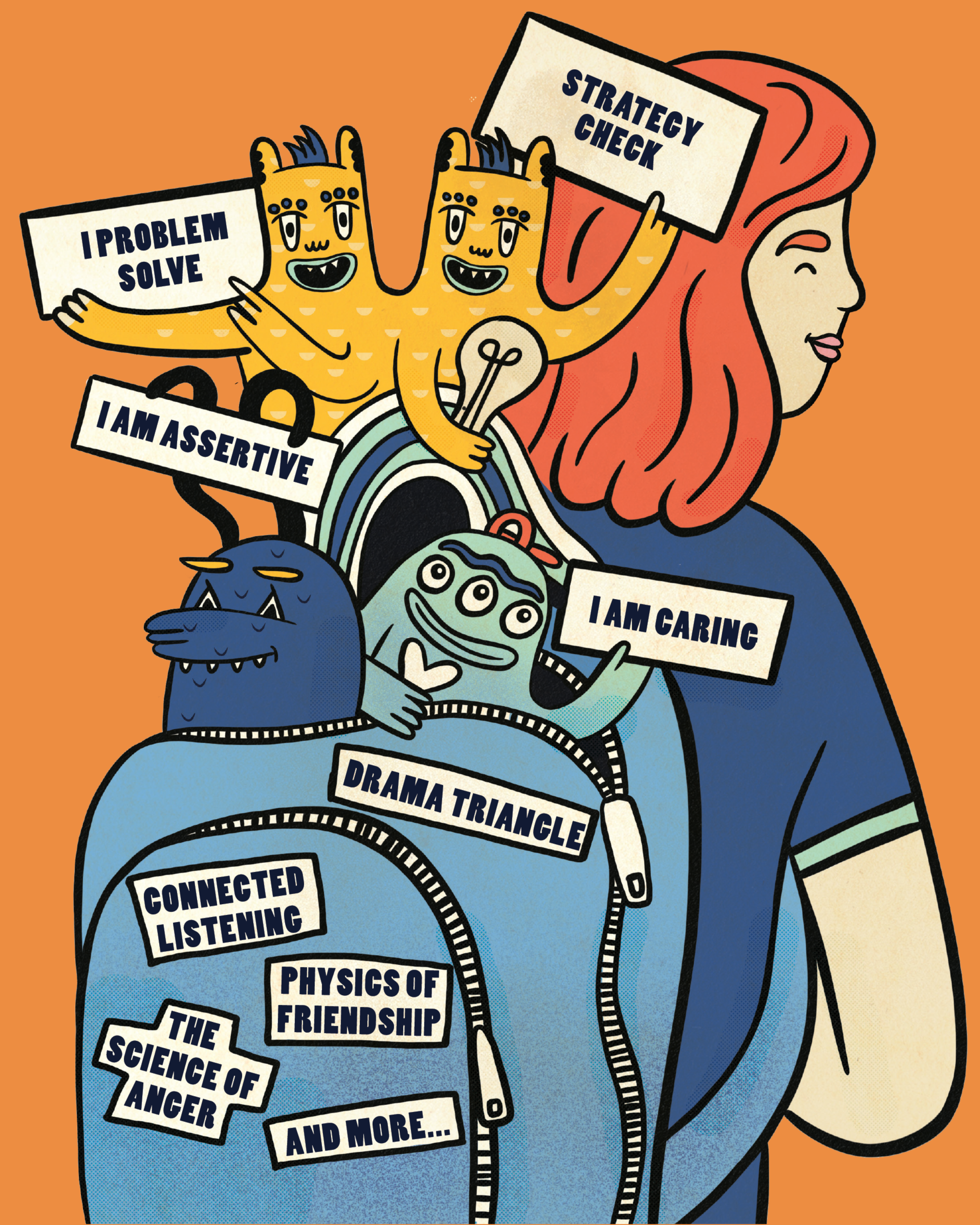
Social Stencil is for students in Grades 3–8, designed to help young people build awareness of themselves and others. Students learn listening styles, emotions, friendship concepts, why conflict happens, and strategies to support conflict management.

Want to learn more? Explore each Social Stencil program to see what’s involved, how it’s delivered, and who it’s designed for.

Dr Connie Buckingham PhD
Psychologist | Program Author | Researcher | Sessional Lecturer | Speaker
While completing her undergraduate Psychology studies, Connie worked as a Learning Support Officer supporting autistic students within a student-centred, arts-inspired school, an experience that strongly shaped her approach to pedagogy. She later worked as a school psychologist before founding a neuroaffirming multidisciplinary allied health practice supporting families and schools across Victoria for 15 years.
Connie first created Social Stencil in 2008 for an independent Sydney girls’ school to address toxic friendship dynamics and relational aggression. Following promising early outcomes, she commenced a PhD with the University of Melbourne. In 2021, Connie invited Australian neurodiversity-affirming advocates to critically review Social Stencil, leading to a significant redesign and the neurodiversity-affirming program it is today.
Connie continues her academic work with the University of Melbourne as a Research Supervisor and Sessional Lecturer. In 2025, she was awarded the University of Melbourne Arts Alumni Giving Award for bringing neurodiversity-affirming learning to the Master of Educational and Developmental Psychology and Clinical Psychology programs.
Connie works closely with Australian and international schools to further develop Social Stencil through facilitator feedback, co-design, and ongoing research. This process allows Social Stencil to continue evolving alongside schools, facilitators, and contemporary understandings of inclusion and wellbeing.